
 What is ME/CFS?

Myalgic encephalomyelitis (ME), often called ME/CFS, is a serious neurological disease, not just “being tired.” It affects many systems in the body, especially the nervous and immune systems, and it can leave people too ill to work, leave the house or even get out of bed.
- 25% of people with ME/CFS are housebound or bedbound
- 75% can’t work, and many are pushed into poverty
- 2–4× more common in women than in men
What’s in a name?
M.E. stands for myalgic encephalomyelitis. The term was coined in 1956, after an outbreak among staff at London’s Royal Free Hospital the year before, and the World Health Organization has classed it as a neurological disease since 1969. It’s the name most patients prefer.
CFS stands for chronic fatigue syndrome, a name introduced by the US Centers for Disease Control in 1988. Many of us feel it downplays how severe the disease is. It’s misleading, too: fatigue is only one of many symptoms, and the diagnostic criteria ask for far more than being tired for a long time.
Symptoms
Most people have dozens of symptoms at once, and they can change from day to day or even hour to hour.
- Post-exertional malaise (PEM)
- Exhaustion that rest doesn’t fix
- Unrefreshing sleep
- Brain fog and trouble thinking
- Derealisation
- Dizziness or fainting when upright
- Heart palpitations, irregular heartbeat
- Headaches & migraines
- Muscle & joint pain
- Flu-like symptoms, sore throat, or swollen glands
- Gastrointestinal issues
- Trouble regulating blood sugar
- Hypersensitivity to light, sound and touch
- Comorbidities (POTS, MCAS, etc.)
PEM: a hangover for trying to live
One of the most horrible parts of ME is also its defining feature: post-exertional malaise, or PEM. It’s hard to explain to anyone who hasn’t had it. We describe it as a brutal hangover that hits you just for trying to live, but it feels a bit different for everyone.
Picture a quiet day: a shower, a few chores, cooking a meal and washing up afterwards, maybe a short walk. For someone with moderate ME, that can be enough to trigger PEM 12 to 72 hours later, and the crash can last days or weeks. For someone severe, listening to music can be enough. For someone very mild, it might be trying to exercise.
This means living inside an “energy envelope”: an invisible limit you have to stay within to keep your baseline, and one that can shrink without notice or consent. Going past it, especially again and again, risks a lasting drop in health.
A spectrum
Like many diseases, ME exists on a spectrum. Some mildly affected people can still work, as long as they’re careful. At the severe end, people are confined to bed in a dark, silent room, unable to tolerate sound, light or touch, and some need feeding tubes to survive.
Symptoms usually have to last six months before a diagnosis. Full recovery is rare, around 5% in a review of studies. For many, ME relapses and remits, with stretches of extreme illness that make any kind of “normal” life or planning incredibly difficult.
Anyone can get ME
ME is most often triggered by an infection. Before the pandemic, one of the most common triggers was Epstein–Barr virus, which causes glandular fever. These days, SARS-CoV-2 is one of the leading causes. In a study at Berlin’s Charité, nearly half of a group of Long Covid patients with ongoing fatigue met the criteria for ME/CFS, and many consider it the most severe form of Long Covid.
Other viruses, bacteria, parasites and fungi can trigger it too. More rarely, so can childbirth, surgery, vaccination or long periods of intense stress. Triggers like these suggest the immune system is heavily involved.
Descriptions of illnesses that sound a lot like ME go back centuries. And it isn’t rare: it’s more common than multiple sclerosis.
“I split my clinical time between the two illnesses, and I can tell you if I had to choose between the two illnesses I would rather have H.I.V.”
In one study, people with ME/CFS had lower quality of life scores than any other condition tested, including lung cancer and stroke.
Why are there still no approved treatments?
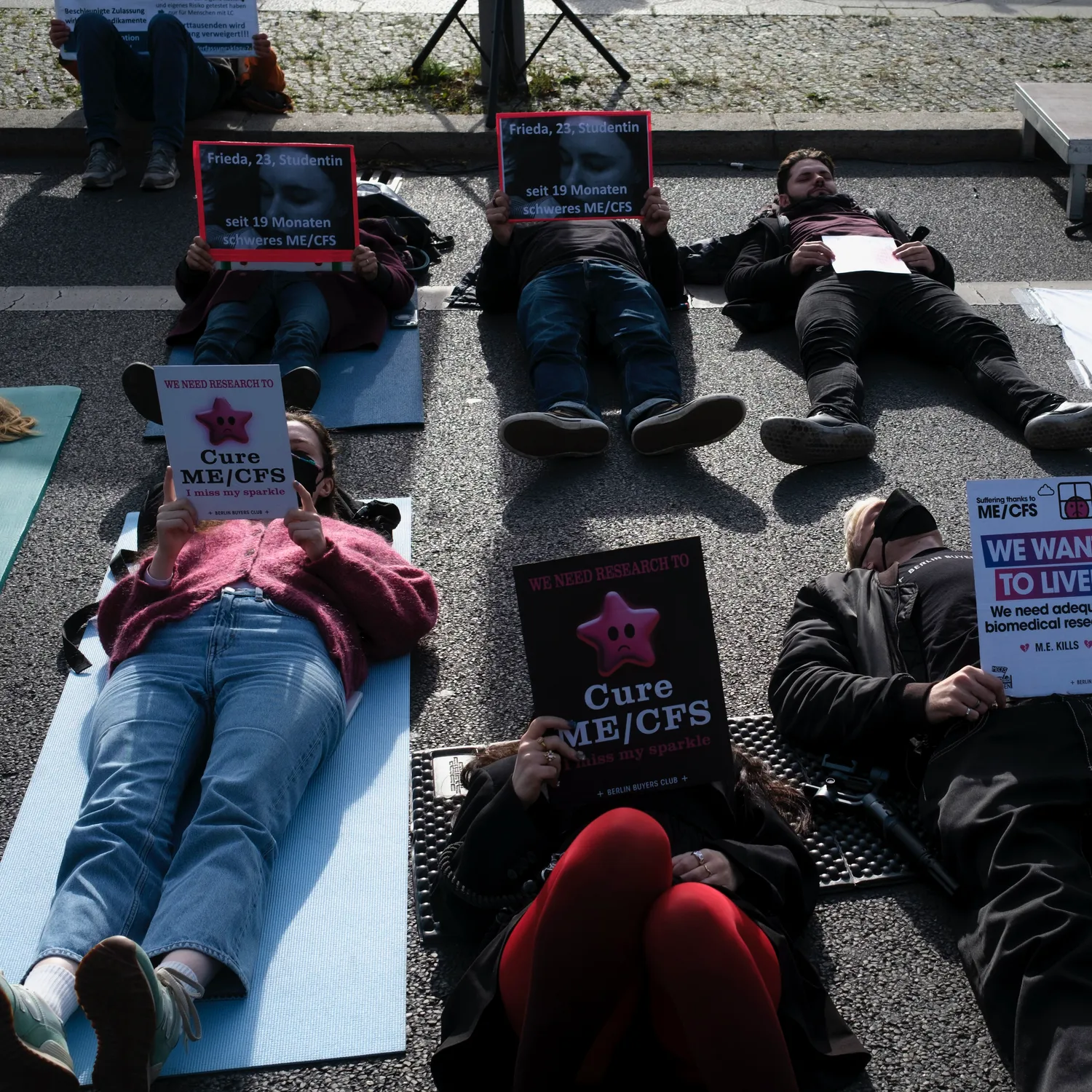
ME/CFS affects up to four times more women than men, and it often strikes young. That is undoubtedly a big part of why it has been neglected for so long: for centuries, young women with complex illnesses were told they had “hysteria,” and people with ME are still told it’s all in their heads.
That stigma, and the gaps in medical knowledge it has left behind, means it can take years to get a diagnosis, especially for people already facing other kinds of marginalisation. Many struggle to get even basic medical care and financial support.
Considering how sick it makes people, ME has never had anywhere near enough research funding. There’s still no biomarker test doctors can order and no approved treatment. We urgently need more research, more trials and ongoing education for healthcare workers.
How you can help
People with ME are too sick to fight for change alone, and anyone can develop it, especially in an ongoing pandemic.
- Share this page and other posts about ME with your friends.
- If you’re able to, donate to research, for example to the Open Medicine Foundation.
- Watch Unrest, Jennifer Brea’s documentary about her life with ME.
- Follow people who share their experience of the disease.
- Email your local politicians and ask how they plan to help people with ME and fund more research.
- Don’t forget your friends with ME. They often feel forgotten and painfully lonely. Reaching out takes energy we don’t have, so check in on them, even if they can’t be there the way they once were.
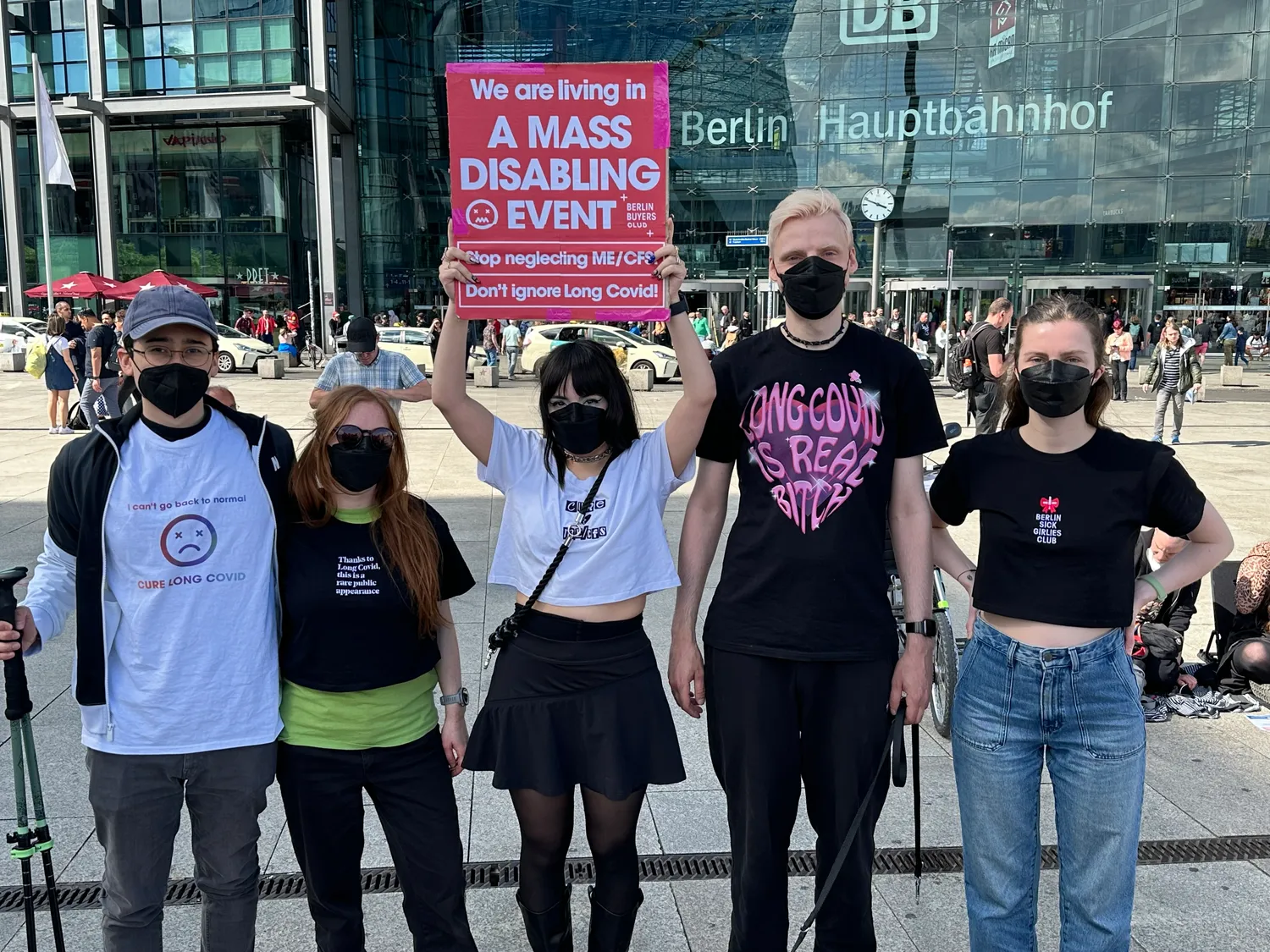
- Please consider masking again.

Sources
- actionforme.org.uk
- cdc.gov
- meassociation.org.uk
- Quote: “Readers Ask: A Virus Linked to Chronic Fatigue Syndrome,” The New York Times, 2009
- “Beyond Myalgic Encephalomyelitis/Chronic Fatigue Syndrome: Redefining an Illness,” Institute of Medicine, 2015
- “A systematic review describing the prognosis of chronic fatigue syndrome,” Occupational Medicine, 2005
- “A prospective observational study of post-COVID-19 chronic fatigue syndrome following the first pandemic wave in Germany and biomarkers associated with symptom severity,” Nature Communications, 2022
- Graph: “The Health-Related Quality of Life for Patients with Myalgic Encephalomyelitis / Chronic Fatigue Syndrome (ME/CFS),” PLOS ONE, 2015