
New Survey: Zero Percent of People with ME/CFS and Long COVID in Berlin Have Reliable Care
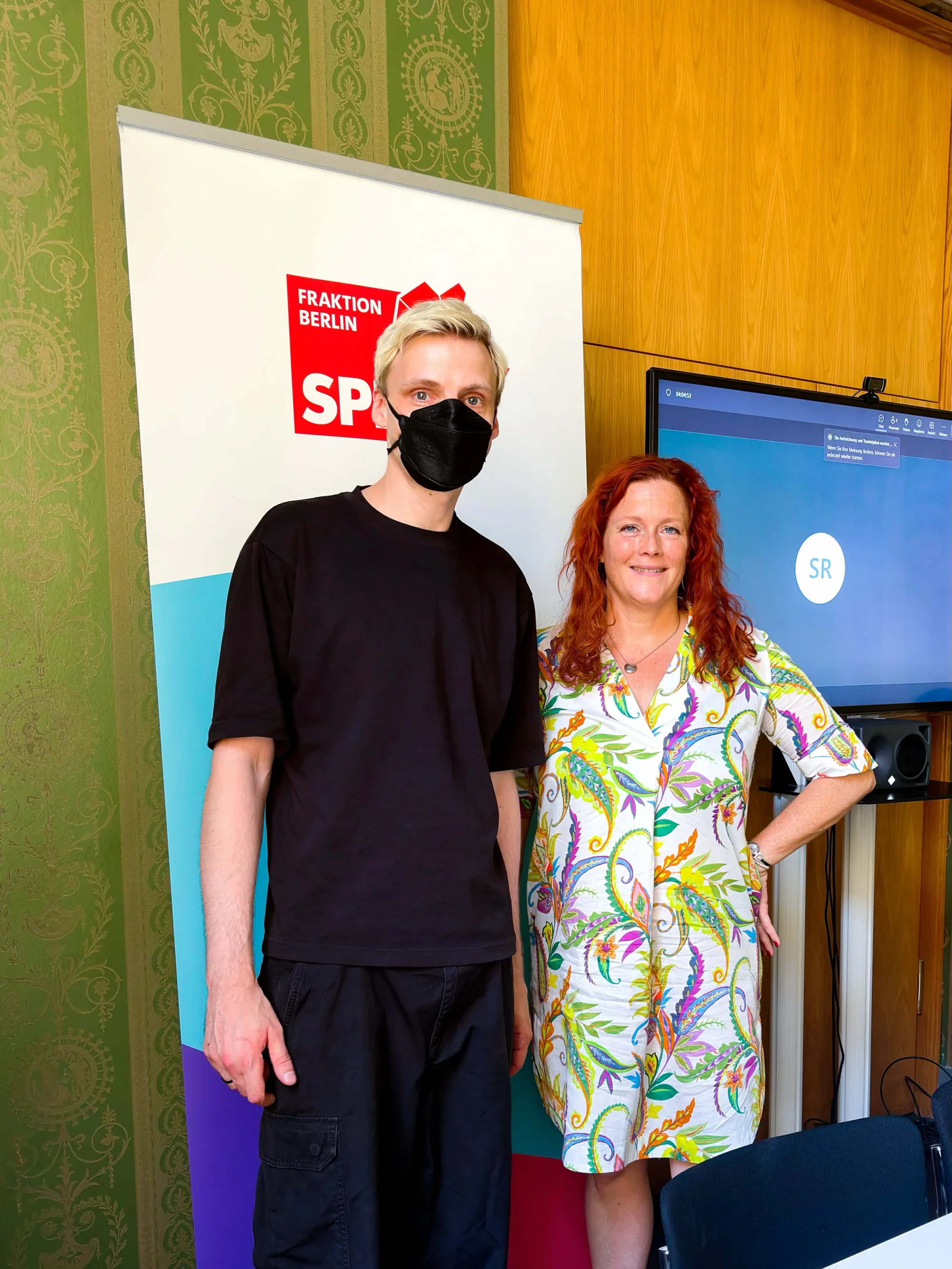
Berlin Buyers Club presents its survey in the Berlin House of Representatives
Berlin, 1 July 2026 – Last Thursday, Berlin Buyers Club was invited to the Berlin House of Representatives to present what people with ME/CFS and Long COVID go through when they look for care in Berlin.
In under 48 hours, a community survey on care started by Berlin Buyers Club gathered 154 detailed responses and many personal stories. The results were devastating: 92 percent of respondents said they have no reliable medical care, even though most of them have been ill for more than two years. Not a single person described care structures for ME/CFS and Long COVID that they could actually find and rely on.
People are desperately looking for help, from their GPs and from one specialist after another. Yet four in ten still haven’t found anywhere to turn, and three in ten needed more than a year to find any help at all. These numbers show that in the seventh year of the SARS-CoV-2 pandemic, the German healthcare system still hasn’t built reliable care for people with ME/CFS and Long COVID. “We often shake our heads in shock when we hear how AIDS patients used to be treated. But we’re doing it again right now,” one person wrote in the survey.
The Fachtag Long COVID, ME/CFS und PostVac, a day of talks on Long COVID, ME/CFS and post-vaccine illness, was hosted by the health policy leads of Berlin’s governing CDU and SPD, Christian Zander and Bettina König. People from politics, healthcare, and patient and self-help groups attended. Rüdiger Schramm, co-founder of Berlin Buyers Club, presented the results of the community survey. “A diagnosis is not care,” Schramm said.
Even people who manage to get a diagnosis often spend a whole year without any treatment to ease their symptoms, if such treatment is available at all. On top of that, the few treatments there are often have to be paid for privately. Yet the first months after falling ill matter most: it’s when people need to learn how to handle exertion, avoid getting worse wherever they can, and apply for the support they need.
The biggest barriers to reliable care, according to respondents, are doctors’ lack of knowledge about these illnesses, how inaccessible most practices are, and the fact that many severely ill people are bedbound or housebound and can hardly get to appointments, if at all. The care system makes the very people who need it most invisible.
Berlin Buyers Club welcomes the first positive steps taken by the state of Berlin, especially the new advice centre for people with post-viral illnesses and the other projects being planned. At the same time, care remains disastrous, above all for people who are severely and very severely ill with ME/CFS and Long COVID.